A SPACE TO EXPLORE · A STORY TO SHAPE
Let me help you be the main character in your story
CelebrADTe: Activities of Daily Thriving. Explore collaborative storytelling, everyday skills, and connection with Brennan McCue (He/Him), Certified Therapeutic Game Master.
Community group sessions, offered virtually online, at a values-aligned sliding scale. $20-$60

A clear note about our practice
CelebrADTe provides peer support through therapeutically applied tabletop roleplaying games. Brennan is not a licensed clinician, therapist, or medical professional. This service does not provide diagnosis, clinical assessment, psychotherapy, treatment, or crisis intervention. It can complement, but does not replace, formal clinical care.

Who is CelebrADTe for?
CelebrADTe is for adults who've served, survived, or simply think differently and want good company while they grow
You might belong here if you are
A veteran who wants connection and perspective with people who don't need the backstory explained.
A trauma survivor who wants a space where you decide what you share and when.
An adult with autism, ADHD, or a disability, whatever support you need to be here, the table adapts to how you communicate.
An LGBTQIA+ adult every table is affirming, and your identity is an ordinary part of the world here, not a topic you have to raise.
Someone with lived experience of an eating disorder in treatment, in recovery, or not sure yet.
And if you
Want peer support as your main support right now or as one piece of a bigger picture that includes a therapist or other provider.
Want your support to work alongside your clinical care, not instead of it.
Are curious about yourself, and willing to explore that through character and story.
Are 18 or older and can consent to services.
This isn't the right fit if
You're in acute crisis and need immediate clinical care.
You're looking for diagnosis, therapy, or medication management.
You need a level of care beyond peer support, such as crisis stabilization or intensive outpatient treatment.
If you're not sure which side of that line you're on, reach out anyway. I'll help you figure it out, and if it's not me, I'll point you toward what you need.
Why TTRPGs?

-
Researchers describe an "alibi function" in roleplaying: the character provides enough symbolic distance to engage difficult material without overwhelming self-exposure. You can approach grief, anger, fear, or questions about identity through someone else's eyes, at a pace you control. The game becomes a container for insight and emotional processing rather than a spotlight on you.
-
Description text goes hereRoleplay asks you to decide what your character would do, not what you would do. That is repeated perspective-taking in action. Research on therapeutically applied roleplaying games describes practice with perspective-taking as one of the benefits participants report alongside self-expression, collaborative problem-solving, and practice with challenging scenarios.
-
Tabletop games are cooperative by design. Players plan, negotiate, and solve problems together, which gives social contact a structure and a purpose. A pilot evaluation of therapeutically applied tabletop groups among veterans found the approach viable and engaging for fostering connection, and research with autistic adults describes the table as a safe, structured place to build relationships.
-
The table is a simulation. You make decisions, face consequences, regulate frustration, wait your turn, and repair when something goes wrong with the option to pause and process. A rapid evidence assessment of the therapeutic utility of Dungeons & Dragons points to practice in communication, social skills, and anxiety management, and research with autistic adults describes gains in social interaction during play. The skills are real. The stakes are fictional. What you do with them is yours.
-
Tabletop games run on agency: what you decide changes what happens next. Research on therapeutically applied roleplaying games emphasizes that voluntary, intrinsically motivated participation is central to how the format works, and that the shared story responds to what players choose to do. That aligns with peer support. You are not a passive recipient of a program. You are a player.
-
Clear rules, turn-taking, and a predictable frame give people something to orient to. Research with autistic adults describes the game as a social scaffold and notes that the format can offer a safe space for relationship-building. Because a table can adapt: text chat, processing time, the agency to redirect the scene if something bothers you too much. The same format can hold people with very different communication needs.
For years, I've watched people step into a character and, through that character's eyes, explore scenarios they couldn't approach as themselves. Within the story, they negotiate, take risks, fail, recover, and connect. That's why tabletop roleplaying games are the modality at the center of CelebrADTe. What I saw anecdotally is now supported by a growing body of peer-reviewed research.
None of this replaces clinical care. What it does is give peer support a format for support and community, with growth happening in action, relationship, and story.
That's what I've watched happen for years.
Sources
Atherton, G., Hathaway, R., Visuri, I., & Cross, L. (2025). A critical hit: Dungeons and Dragons as a buff for autistic people. Autism, 29(2), 382–394.
Battles, A. R., Curland, R. A., & Cruitt, P. J. (2025). A pilot evaluation of a therapeutically applied tabletop role playing game group therapy among veterans. International Journal of Group Psychotherapy, 75(3), 443–466.
Henrich, S., & Worthington, R. (2023). Let your clients fight dragons: A rapid evidence assessment regarding the therapeutic utility of 'Dungeons & Dragons'. Journal of Creativity in Mental Health, 18(3), 383–401.
Kilmer, E., Rubin, J., Scanlon, M., & Kilmer, J. (2024). Therapeutically applied RPGs to support adolescent social connection and growth during the COVID-19 pandemic. Journal of Creativity in Mental Health, 19(2), 210–231.
What to Expect:
From First Contact to Your First Session
CelebrADTe runs online, in small tables of 4–6 players, using Roll 20 virtual tabletop and Google Meet, a HIPAA-compliant video platform. Here's the whole path, start to finish, so you know what you're walking into.
-
Send a message through the contact form on this site, or email me directly at brennan@celebradte.life. I typically respond within 2 business days.
-
Description text goes hereA free 20–30 minute call. We talk about what you're looking for, what you're hoping the table gives you, and whether this format fits. I'll explain what peer support is and isn't, how the sessions work, and what confidentiality means here. You can ask me anything. No commitment, and no pressure to decide on the call.
-
If we both want to go further, you'll get a written intake covering:
What you're hoping to get from the table
Anything you'd like me to know about how you communicate, what overwhelms you, or what helps
Accessibility needs — visual, auditory, motor, processing, anything else
Your game preferences — which rulesets and settings you're drawn to, and which you'd rather avoid
Scheduling availability
An emergency contact
Whether you're working with a therapist or other provider, and whether you'd like me to coordinate with them
You answer what you want to answer. Nothing here is a test, and nothing rules you out automatically.
-
I read your intake and we decide together whether this is a good fit. If I think a different table, a different pace, or a different kind of support would serve you better, I'll say so and explain why. The decision stays yours. If CelebrADTe isn't right for you, I'll help you find what is.
-
Before you sit at a table, we go through and sign:
Informed consent — what peer support is, what it isn't, and what you're agreeing to
Group agreements — confidentiality, respect, boundaries, and how we handle conflict
A Consent in Gaming form (Sean K. Reynolds & Shanna Germain) — a written checklist where you mark what you welcome, what you'll tolerate if it serves the story, and what won't appear at your table. This shapes content; it's never used to single anyone out.
Release of information — only if you want me coordinating with a provider. You decide what may be shared, with whom, and for how long, and you can revoke it at any time.
Payment and cancellation terms
A note on boundaries and safety. Part of the work of therapeutic gameplay is exploring edges, including edges shaped by trauma. That exploration is real, and it isn't risk-free. It only happens inside a structure that makes it safe. The Consent in Gaming checklist establishes what's open and what's closed before we ever sit down. Lines and veils let us mark the difference between what happens off-screen and what we're willing to approach carefully. The X-card lets any player pause, redirect, or skip a scene at any moment, without explanation. I'll also check in after intense scenes before we move on. If a player has a safety method they prefer that isn't listed here, I'm glad to explore it with them. Edges get explored on purpose, not by accident.
-
I'll place each player at the table that's the best fit for them. If there's demand for a ruleset or setting I don't currently run, I'll look into running it rather than turning people away — so if you have a game in mind, tell me.
Every table starts as a cohort. You'll begin at the same point as everyone else at your table, so you're never stepping into a game that's already in progress. If a table you want isn't running yet, you can join the interest list and I'll reach out when it forms. I won't seat you at a table you didn't agree to.
-
Every table starts here before play begins. We build characters together, set the tone and themes of the game, agree on content boundaries, and talk through safety tools. This is where the table's culture gets set, and it's the most important session we'll have.
-
We meet weekly for 90 minutes. The initial commitment is 6 sessions, with the option to continue for as long as the table wants to keep going. Each session opens with a brief check-in and closes with a short debrief. Debrief isn't mandatory, you can pass, but it's there if you want it.
-
We do a fuller review at three weeks, which is the midpoint of the initial 6-session arc, and again at the end of the arc if the table continues. On top of that, every session opens with a short check-in. You can pause or leave at any time, for any reason or none. If you leave, I'll offer a closing conversation and referrals if they'd be useful. No hard feelings, and no exit interview.
-
Every table uses a combination of:
The Consent in Gaming form (Reynolds & Germain) — completed at session zero
Lines and veils — marking what stays off-screen entirely, and what can happen but won't be described in detail
The X-card — any player can pause, redirect, or skip a scene without explaining why
If a player has another method they're more comfortable with, I'm willing to explore it as an option.
Practically, that means:
Any player can pause, redirect, or skip a scene without explaining why. I honor it without discussion unless the player wishes to discuss it.
Content boundaries set at session zero stay set. Changing them requires the whole table's agreement.
We check in after intense scenes before moving on.
Diet talk and body commentary stay off the table — in character and out — for everyone's sake.
-
What you share at the table stays at the table. I don't discuss players with anyone outside the practice without your written permission.
The limits, stated plainly:
I will act if I believe someone is at imminent risk of serious harm to themselves or another person.
If a court orders records, I comply to the extent the law requires.
On video: sessions use Google Meet, which is HIPAA compliant.

Potential Benefits
Growth, Connection, and Skill Practice Through Collaborative Storytelling
CelebrADTe offers structured peer support through therapeutically applied tabletop roleplaying games (TTRPGs). Tabletop gaming is a collaborative, engaging activity, participating in a consistent cohort provides rich opportunities for personal growth, social connection, and low-stakes skill rehearsal.
Common Table Outcomes
Participating in a weekly table allows players to explore new dynamics, practice interpersonal skills, and build community in a supportive, structured environment. Below are four core areas where participants commonly experience growth
-
Consistent Peer Cohort: Meeting regularly with a small group of 4 to 6 players fosters meaningful relationships and ongoing peer support.
A Dedicated Space: The table provides a predictable, structured environment where participants are welcomed, expected, and missed when absent.
Shared Task Purpose: Social connection grows naturally around cooperative problem-solving and storybuilding rather than forced or unstructured conversation.
-
Communication Rehearsal: The table functions as a low-stakes simulation to practice communication, active listening, self-advocacy, and collaboration.
Fictional Stakes: Players can test decisions, navigate social dynamics, face consequences, and recover from mistakes in a setting where the stakes remain entirely fictional.
Adaptive Interaction: Clear rules and turn-taking offer a predictable social scaffold that accommodates diverse communication styles, processing times, or sensory needs.
-
Exploring Through Character: Stepping into a character's role allows players to navigate situations, choices, and emotions from a new viewpoint.
Symbolic Distance: The "alibi function" of roleplaying provides a comfortable buffer to approach complex themes such as agency, trust, or conflict without overwhelming self-exposure.
Active Empathy: Consistently evaluating decisions through a character's eyes builds muscle memory for empathy and perspective-taking outside the game.
-
Cooperative Worldbuilding: Players actively shape the narrative through their choices, experiencing the satisfaction of co-creating a shared story.
Responsive Environment: Unlike passive media, tabletop gaming centers player agency. A shared story that directly responds and adapts to what players choose to do.
Safe Exploration of Edges: Structured safety tools (including Lines & Veils, the Consent in Gaming checklist, and the X-Card) allow players to explore creative and narrative boundaries with full autonomy.
Realistic Expectations for Growth
TTRPGs offer significant potential for personal reflection and social connection, maintaining grounded expectations ensures a positive and transparent experience
Gradual, Relational Process: Growth in peer support happens over time through regular attendance, shared experiences, and collaborative play rather than immediate transformation.
Voluntary Participation: Participants retain full control over their engagement at all times; you decide how deeply to engage with story themes, what to share, and when to step back.
Individual Journeys: Outcomes vary for every player depending on personal goals, table chemistry, and individual comfort levels.
Non-Clinical Practice Disclaimers & Boundaries
To ensure clarity and participant safety, CelebrADTe maintains strict boundaries regarding the non-clinical nature of its services
Peer Support Scope
CelebrADTe provides peer support through therapeutically applied TTRPGs. Brennan McCue is a Certified Therapeutic Game Master and peer supporter, not a licensed clinician, therapist, counselor, or healthcare provider.
No Medical or Clinical Claims
Peer support services do not diagnose, assess, or treat any clinical or medical condition, nor do they guarantee symptom reduction or clinical treatment outcomes.
Complementary Support
CelebrADTe is designed to sit alongside and complement formal clinical care or therapy, never to substitute for or replace licensed mental health treatment.
Stability & Crisis Limits
CelebrADTe cannot evaluate, assess, or monitor clinical or medical stability, and does not provide between-session crisis intervention or emergency care.
Emergency Contacts
If you are experiencing a mental health crisis or emergency, please dial 988 (Suicide & Crisis Lifeline), text HOME to 741741, call 911, or contact local emergency services.
About Brennan
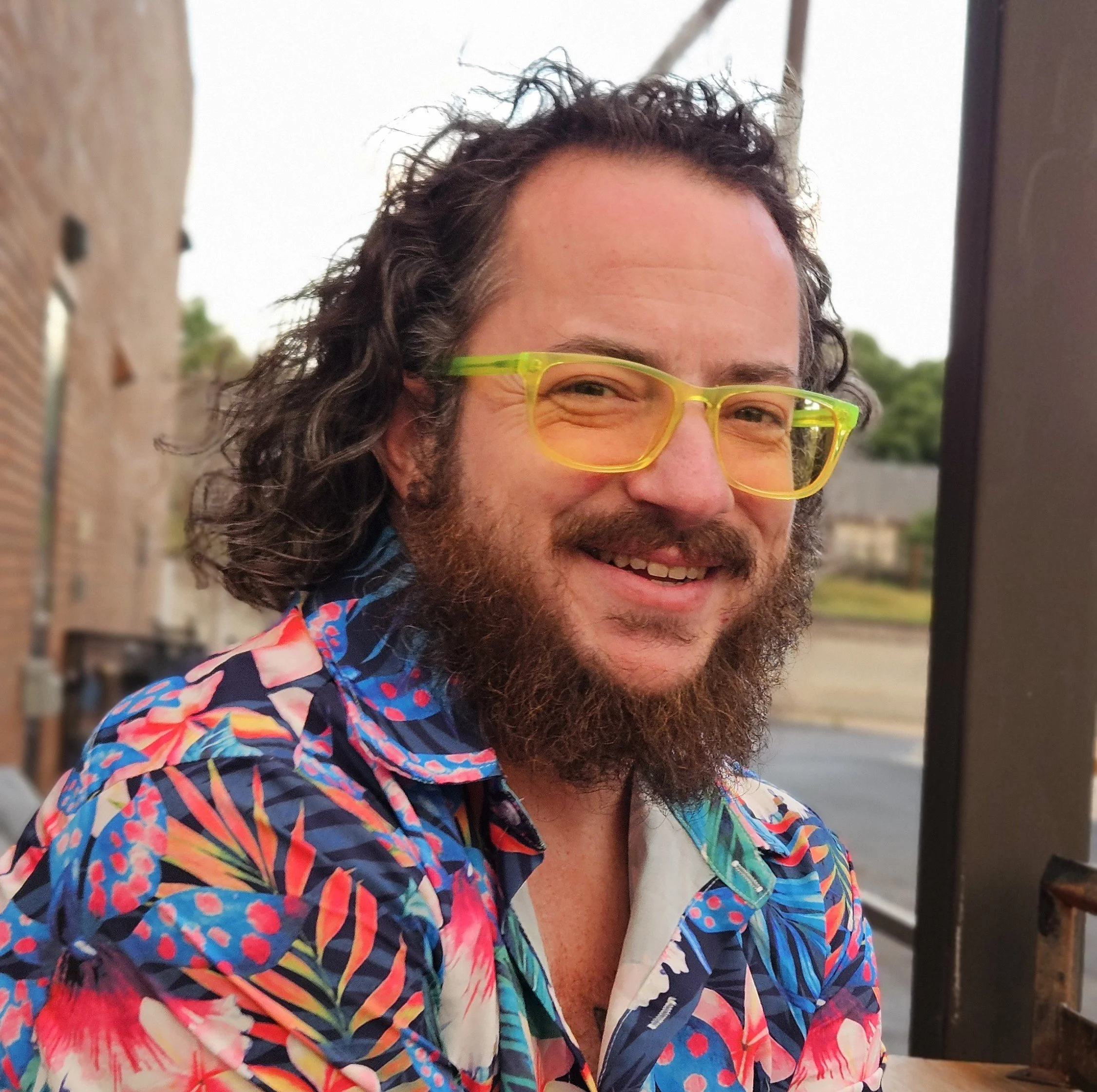
Hello, I am Brennan McCue (He/Him), Collaborative leader of CelebrADTe: Activities of Daily Thriving. Let me tell you a little bit about myself
I joined the Navy right after high school. My time taught me how to effectively communicate with a vast variety of people from wildly different backgrounds while also managing the stresses that come with being a young adult sent off to war and simultaneously maintaining complicated equipment meant only to cause harm.
After 12 years in the Navy, I went to Johnson & Wales University, a 31 year old father of two with a full time job in restaurant kitchens to boot, where I studied Culinary Arts, Nutrition, and Food Science on the GI Bill. I think my most impactful class was an extra-curricular class called community leadership. Through that class I got to volunteer with Cooking Matters teaching underserved communities about nutrition and cooking skills. Throughout the experience, I struggled to find work aligned with my values. Exploring a more meaningful path led me to become a direct support professional (DSP), guiding adults with intellectual and developmental disabilities through a wide range of tasks and facilitating community participation.
Within a few months of meaningful work as a DSP, I already had the itch to extend these services to more folks who could benefit, especially fellow veterans. I often jokingly refer to my position as 'a fun uncle' who facilitates daily life with my clients out in the community. It has been an honor witnessing my relationships with my clients and seeing how a hands-on approach can be a true factor in not only long-term behavioral change, but expanding the window of tolerance toward behavioral comfort. It became clear to me that more of us deserve that fun uncle, that positive buddy to believe in us and help navigate the winding roads of life.
I’ve been a fan of Tabletop Role-Playing Games (TTRPGs) since about 1990. I’ve played and run games in D&D, Pathfinder, Savage Worlds, RIFTS, and many others over the years both privately and at conventions. It’s my honor to be able to marry my passion for caregiving with my love for tabletop gaming and present a fun and compassionate environment where you can play games and heal.
Let's make you the main character of your story!

About CelebrADTe
Activities of Daily Thriving (ADT)
In healthcare and occupational settings, "Activities of Daily Living" (ADLs) refer to basic self-care tasks required for personal survival, such as bathing, dressing, and eating. CelebrADTe introduces the concept of Activities of Daily Thriving (ADTe)—shifting the focus beyond basic survival toward active human flourishing, relational connection, and personal agency.
Thriving requires more than navigating daily routines; it requires spaces where individuals can exercise creativity, practice low-stakes communication, explore personal boundaries, and experience genuine belonging. Through cooperative tabletop gaming, participants practice real-world social skills and decision-making within a supportive fictional world.
Honor-Based Sliding Scale
Financial constraints should not prevent individuals from accessing supportive community spaces. CelebrADTe operates on an honor-based sliding scale ranging from $20 to $60 per session for weekly 90-minute table meetings.
Self-Selected Rates: Participants choose their own rate within the $20–$60 range based on their individual financial capacity.
No Verification Required: Accessing lower sliding scale tiers requires no income documentation, financial proof, or explanatory conversations.
Sustaining Community Access: Participants who choose to pay at the upper end of the scale help sustain lower-tier seats and fund community seats for others.
Confidential Community Seats
To ensure access for individuals experiencing acute financial hardship, CelebrADTe offers two confidential community seats (no-cost) at every table of six players.
Absolute Confidentiality: Community seat enrollment is arranged privately between the client and Brennan McCue.
Peer Equity: No participant at the table knows what any other member pays, ensuring complete equity across the group.
No Application Process: Requests for community seats do not require financial applications or justification.
Practice Ethics & Affirming Environment
CelebrADTe maintains strict practice ethics to ensure a predictable, safe, and affirming environment across all cohorts.
Strict Anti-Diet & Body Commentary Policy: Body commentary and diet talk stay strictly off the table—both in character and out of character—to support members in eating disorder recovery.
Affirming Environment: All tables are explicitly affirming spaces for LGBTQIA+ adults, neurodivergent individuals, trauma survivors, and veterans. Chosen names and pronouns are respected at all times.
Trauma-Informed Safety Architecture: Every table uses structured pre-game Consent in Gaming checklists, Lines & Veils narrative boundaries, the real-time X-Card redirection tool, and post-scene debriefs.
Cohort Entry Model: Participants enter as cohorts during Session Zero, ensuring that no player ever steps into a game already in progress.
HIPAA-Compliant Data Privacy: Client intake details, consent forms, and communications are held strictly within a secure Google Workspace boundary protected by a Business Associate Agreement (BAA) and two-factor authentication.
Geek Therapeutics TGM Certification & Facilitation Framework
CelebrADTe’s group facilitation is grounded in comprehensive professional training through Geek Therapeutics, a leader in evidence-informed therapeutic roleplay and geek culture integration. Facilitator Brennan McCue is completing credentialing as a Certified Therapeutic Game Master (TGM), applying tabletop gaming mechanics with deliberate intentionality to support structured social connection, emotional regulation, and personal agency.
Rather than using tabletop gaming strictly for recreation, the Geek Therapeutics methodology designs collaborative story spaces where narrative mechanics, character dynamics, and player choices directly serve personal growth. CelebrADTe’s facilitation approach incorporates six research-backed pillars of therapeutic gaming:
The Alibi Function (Psychological Distance): A fictional persona serves as a protective buffer, offering symbolic distance that allows participants to navigate complex emotional themes, explore identity, and test challenging situations without direct self-exposure.
Intentional Perspective-Taking: Embodying a character requires evaluating decisions from alternate viewpoints, cultivating active empathy, cognitive flexibility, and broader narrative insight.
Shared Task Connection: Cooperative gameplay goals naturally center social interaction around structured problem-solving, fostering relational connection and cohort unity without demanding forced conversation.
Low-Stakes Behavioral Rehearsal: The fictional environment operates as a low-risk simulation, allowing participants to practice interpersonal communication, establish personal boundaries, and work through emotional responses in a safe space where choices can be explored and repaired.
Responsive Story Agency: The world responds dynamically to participant choices, centering self-direction and reinforcing individual autonomy, self-advocacy, and internal motivation.
Structured Social Scaffolding: Clear game rules, structured turn-taking, and safety tools provide a stable foundation that accommodates diverse communication preferences, sensory needs, and processing styles.
Mission & Identity
CelebrADTe: Activities of Daily Thriving provides structured peer support through therapeutically applied tabletop roleplaying games (TTRPGs). The practice is built on the belief that collaborative story play offers a unique, structured environment for adults to explore personal growth, practice interpersonal skills, and build community.
Grounded in lived experience and intentional facilitation, CelebrADTe serves adults who have served in the military, survived trauma, navigate neurodivergence, identify as LGBTQIA+, or have lived experience with eating disorders. By combining structured game mechanics with non-clinical peer support, CelebrADTe helps participants connect with others without needing to explain or defend their background.
EVERYONE DESERVES A SEAT AT THE TABLE
Resources
This page lists services that people at CelebrADTe sometimes need — crisis support, population-specific organizations, and peer support lines. I keep it because peer support isn't crisis care, and because sometimes what someone needs is outside what I can offer.
This page isn't a substitute for emergency services. If you're in immediate danger, call 911. If you're thinking about suicide or you're in crisis, call or text 988.
I check these listings periodically, but organizations change. If something here is out of date, tell me and I'll fix it.
If you're in crisis right now
988 Suicide & Crisis Lifeline
Call or text 988. Available 24/7. Spanish line available by pressing 2.
Crisis Text Line
Text HOME to 741741. Available 24/7.
Emergency services
Call 911 if you or someone else is in immediate danger.
For veterans and service members
Veterans Crisis Line
Dial 988, then press 1. You can also chat at VeteransCrisisLine.net/Chat, or text 838255. Available 24/7, and it serves veterans, service members, National Guard and Reserve members, and the people who support them.
VA health care and benefits
Your local VA medical center can connect you to mental health services, peer support specialists, and benefits navigation. Use the VA facility locator to find the one nearest you: va.gov/find-locations.
For trauma survivors
RAINN National Sexual Assault Hotline
Call 800-656-4673 (800-656-HOPE), or use the online hotline at hotline.rainn.org/online. Free, confidential, 24/7.
National Domestic Violence Hotline
Call 800-799-7233, text START to 88788, or chat at thehotline.org. TTY available at 800-787-3224. Available 24/7.
American Foundation for Suicide Prevention — support groups
AFSP maintains a directory of suicide bereavement support groups in the US and internationally, many facilitated by peers who have been through a loss themselves.
National Center on Domestic Violence, Trauma & Mental Health
Resources and toolkits on the intersection of trauma, mental health, and substance use. More useful for understanding than for direct support, but a good starting point if you're trying to make sense of what you're experiencing.
For LGBTQIA+ adults
Trans Lifeline
Call 877-565-8860 (US) or 877-330-6366 (Canada). A peer support phone service run by trans people, for trans and questioning callers. You don't have to be in crisis to call, and you don't have to be sure you're trans. Hours vary, so check translifeline.org first.
SAGE LGBT Elder Hotline
Call 877-360-5428. For LGBTQ+ elders and the people who care for them. Available 24/7, in English and Spanish, with translation in additional languages.
The Trevor Project
Call 866-488-7386, text START to 678678, or chat at thetrevorproject.org/get-help. Note that this line serves LGBTQ+ young people ages 25 and under — if that's you, it's a good fit; if not, Trans Lifeline and 988 are the better calls.
For neurodivergent adults
Autistic Self Advocacy Network (ASAN)
A resource library of plain-language toolkits, self-advocacy guides, and "know your rights" material, written by and for autistic people.
CHADD (Children and Adults with ADHD)
Adult education courses, virtual peer support communities, and chapter-run support groups. Information line: 800-233-4050, Monday–Friday, 1:00–5:00 PM Eastern.
NAMI HelpLine
Call 800-950-6264, text Helpline to 62640, or email helpline@nami.org. Monday–Friday, 10 AM–10 PM Eastern. Information, referrals, and resources on mental health — not a crisis line.
Disability Rights Education and Defense Fund (DREDF)
A national law and policy center run primarily by disabled people, focused on civil and human rights. Useful if you're dealing with discrimination in housing, employment, education, or health care.
For people with lived experience of an eating disorder
ANAD (National Association of Anorexia Nervosa and Associated Disorders)
Helpline: 888-375-7767, Monday–Friday, 9 AM–9 PM Central. Free emotional support and treatment referrals, plus weekly support groups.
NEDA (National Eating Disorders Association)
Helpline: 800-931-2237. Information about treatment and support services.
National Alliance for Eating Disorders
Helpline staffed by licensed therapists: 866-662-1235, Monday–Friday, 9 AM–7 PM Eastern. Also maintains a treatment directory at findEDhelp.com. Note that this is a helpline, not a crisis line.
They also run free, therapist-led virtual support groups, including a Mid-Life & Beyond group for people aged 40+ and a BIPOC group. Pre-registration required.
Nutrition support, alongside therapy
Eating disorder recovery usually isn't a single-provider job. Therapy, nutrition care, and medical monitoring each do something the others can't, and they work best when they're coordinated rather than sequential. If you're working with a therapist, a dietitian who specializes in eating disorders is often the next piece, and it's a different kind of support, not a replacement for what you're already doing.
Side By Side Nutrition (sidebysidenutrition.com), 708-717-7394, contact@sidebysidenutrition.com. A group practice of registered dietitians focused on trauma informed eating disorder recovery, intuitive eating, body image support, and weight-inclusive nutrition therapy. They work with adolescents and adults, take insurance, and offer telehealth across the US. Their approach is individualized and holistic, and they run online meal support groups alongside one-on-one nutrition counseling.
They also maintain a public resource hub with free material on body image, family-based treatment, and recovery. Useful even if you're not a client.
If you're looking for a dietitian closer to home, the National Alliance for Eating Disorders treatment directory (findEDhelp.com) includes nutrition providers, and ANAD's helpline can help you find one. When you're screening a dietitian, the things worth asking about are whether they work from a weight-inclusive or Health at Every Size framework, whether they have specific experience with your presentation, and whether they're willing to coordinate with your therapist.
Peer support lines (not crisis lines)
Warmline.org
A directory of peer-run warmlines, phone lines staffed by people with their own lived experience of mental health recovery. Warmlines aren't crisis lines: they're for when you're struggling but not in immediate danger, and you want to talk to someone who's been there. Search by state, language, and availability.
This is the closest thing on this page to what CelebrADTe does. If you're on a waitlist for a table, or between sessions and need to talk, a warmline is a reasonable place to start.
If you're looking for clinical care
CelebrADTe is peer support, not clinical care. If you're looking for a therapist, psychiatrist, or treatment program:
Inclusive and identity-affirming directories. These exist because the big general directories don't always filter well for what you actually need — and because "find a therapist" is a harder search when the first three you call aren't affirming of who you are.
Inclusive Therapists — inclusivetherapists.com. A free directory built for marginalized communities, including BIPOC, LGBTQIA+, neurodivergent, and disabled people. You can search by provider identity, cultural identity, advocacy focus, and language, not just by specialty.
National Queer and Trans Therapists of Color Network — nqttcn.com/en/mental-health-directory. A directory specifically for queer and trans therapists of color.
Neurodivergent Therapists — ndtherapists.com. A directory of therapists who identify as neurodivergent themselves or who center neurodivergent clients.
Therapist Neurodiversity Collective Directory — therapistndc.org/therapist-directory. Therapists who work from a neurodiversity-affirming framework rather than a deficit model.
Therapy for Black Girls — providers.therapyforblackgirls.com
Therapy for Black Men — therapyforblackmen.org
Latinx Therapy — latinxtherapy.com
General directories. TherapyDen (therapyden.com) is explicitly values-forward and lets you filter for affirming care. GoodTherapy (goodtherapy.org) and Zencare (zencare.co) are larger and well-established. Psychology Today's directory is the biggest, and it does have filters for neurodivergence, LGBTQ+ affirming, disability, and trauma-informed care; it's just not built around identity affirmation the way the ones above are.
Reduced-fee therapy. Open Path Psychotherapy Collective (openpathpsychotherapycollective.org) connects people with therapists who offer reduced rates.
If you're already working with a provider and want me to coordinate with them, that's covered in the Release of Information and I'm glad to do it.
A note on what this page is
I keep this list because I'd rather you have somewhere to go than not. I don't endorse every organization here, I can't vouch for every clinician they might refer you to, and I'm not able to follow up on whether a referral worked out.
If you call one of these and it doesn't help, tell me. I'd rather know than keep a listing that isn't working.